





New Zealand's resident population reached 4 million in April 2003 and was estimated to be 4.04 million at the end of December 2003.
During the 2003 year, the population grew by 63,000 or 1.6 percent, the same rate of growth as in 2002. These estimated growth rates were relatively high compared with most years since 1991.
Under medium population projection assumptions, the population is expected to grow by an average of 1.2 percent per year up to 2006, reflecting significant net migration gains during this period. Assuming net migration of 5,000 people per year after that, the growth rate is then expected to slow gradually to 0.6 percent per year during the decade following 2010. Such a growth rate would add around half a million people to the population by 2021.
Figure P1 Historical and projected
resident population, 1981-2021
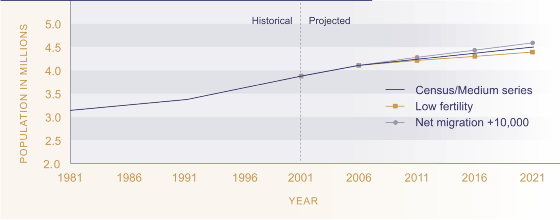
Source: Statistics New
Zealand Note: All three projections assume medium mortality. The
medium projection series assumes medium fertility and a long-term
annual net migration gain of 5,000
